
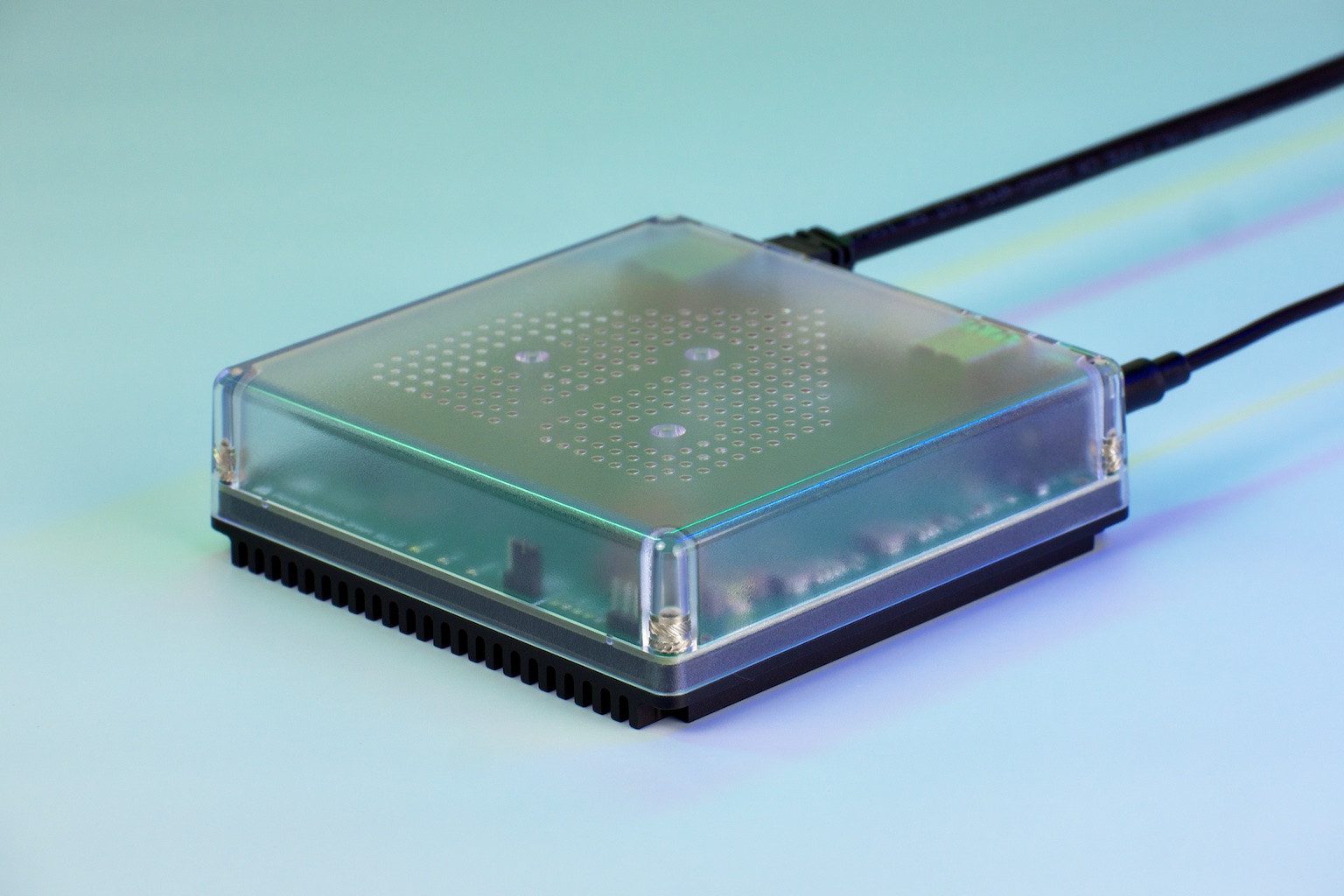
The Home Assistant Green is Nabu Casa’s turnkey smart home hub, engineered to provide an accessible, dedicated physical appliance for local home automation without requiring manual single-board computer configuration or SD card flashing.
1. Silicon & Hardware Specifications
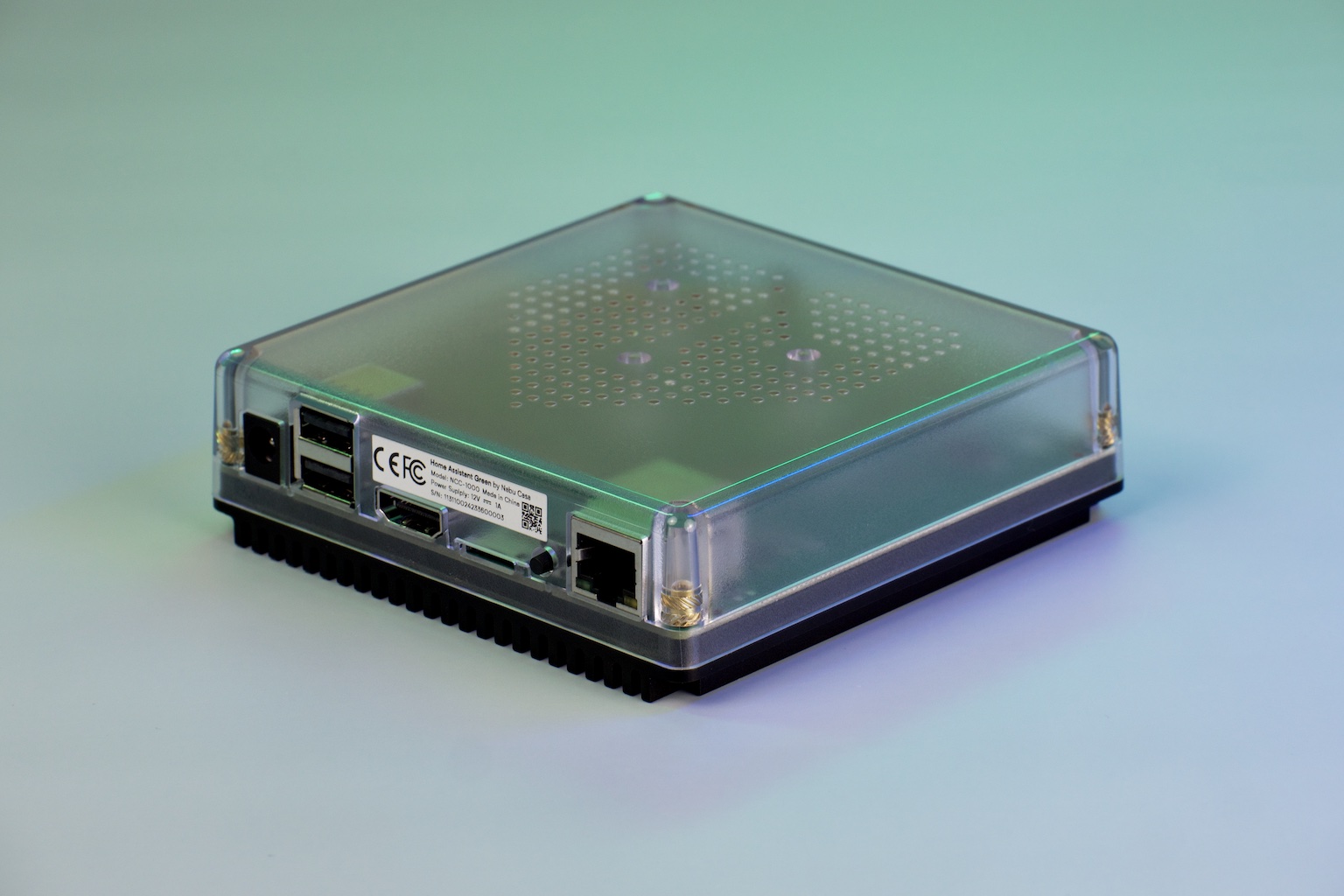
Fig 1. Official Home Assistant Green enclosure rear profile displaying Gigabit Ethernet RJ45, dual USB 2.0 host ports, and DC power input.
Designed as an energy-efficient residential controller, the Green operates silently on passive thermal dissipation:
| Component | Specification | Architectural Impact |
|---|---|---|
| SoC | Rockchip RK3566 (Quad-core ARM Cortex-A55 @ 1.8GHz, 64-bit) | Energy-efficient compute for automation processing, SQLite event databases, and local integrations. |
| System Memory | 4GB LPDDR4X RAM | Ample capacity for running dozens of Core integrations and lightweight add-ons simultaneously. |
| Internal Storage | 32GB eMMC Flash (High-endurance storage) | Industrial-grade flash eliminates the wear-out and corruption vulnerabilities inherent to consumer microSD cards. |
| Networking | Gigabit Ethernet (10/100/1000 Mbps RJ45) | Stable, low-latency wired connectivity for reliable local device polling and WebSocket streams. |
| Expansion | 2× USB 2.0 Type-A Host Ports, MicroSD card slot (recovery/backup) | Dedicated ports for external multi-protocol wireless radios (Zigbee, Thread, Z-Wave). |
| Power Consumption | ~1.7W Idle, ~3.0W under active processing load | Draws minimal wall power; powered via included 12V / 1A DC barrel power supply. |
2. Radio Expansion Requirements: Zigbee, Thread & Matter
To maintain affordability and avoid internal RF desensitization within a compact enclosure, Home Assistant Green does not integrate onboard wireless transceivers. Users connecting Zigbee, Thread, or Z-Wave mesh devices attach external USB dongles:
- Home Assistant Connect ZBT-1 (formerly SkyConnect): Official USB coordinator supporting Zigbee 3.0 and Thread/Matter over OpenThread Border Router (OTBR). Includes a 0.5-meter USB extension cable to isolate antenna reception from electrical port noise.
- Third-Party Adapters: Fully compatible with Silicon Labs EFR32MG21, Texas Instruments CC2652P, and Zooz 800-Series Z-Wave dongles.
3. Home Assistant Green vs Home Assistant Yellow vs Mini-PC
Understanding where Green fits in the ecosystem:
| Platform | Compute & RAM | Onboard Radios | Expansion & M.2 NVMe | Primary Use Case |
|---|---|---|---|---|
| Home Assistant Green | RK3566 / 4GB RAM / 32GB eMMC | None (External USB) | MicroSD slot | Entry-level to mid-sized smart homes wanting zero maintenance. |
| Home Assistant Yellow | Raspberry Pi CM4 (Up to 8GB) | Integrated Zigbee / Thread (EFR32) | M.2 2280 NVMe SSD slot | Enthusiasts requiring onboard radios, PoE options, and NVMe SSD speeds. |
| Intel N100 Mini-PC | Intel N100 / 8-16GB / 256GB+ | None (External USB) | PCIe NVMe / 2.5GbE | Power users running heavy local LLMs, multi-camera NVR object detection (Frigate), and virtual machines. |
4. Setup Experience & Onboarding
Home Assistant Green ships with Home Assistant OS (HAOS) pre-installed. The setup process is strictly plug-and-play:
- Connect the included Ethernet cable to your local network router or switch.
- Connect the 12V DC power adapter.
- Open a browser on your local network and navigate to
http://homeassistant.local:8123. - The initial onboarding wizard prompts for administrator account creation, automatically discovers local network devices via mDNS/SSDP, and configures automated backup schedules.
5. Summary Assessment
Architecture Takeaway
Home Assistant Green represents the cleanest entry point into self-hosted, private home automation. Its pairing of low-power ARM compute, durable 32GB eMMC storage, and clean USB radio expansion provides long-term operational stability without the maintenance complexity of custom single-board builds.
0 Comments