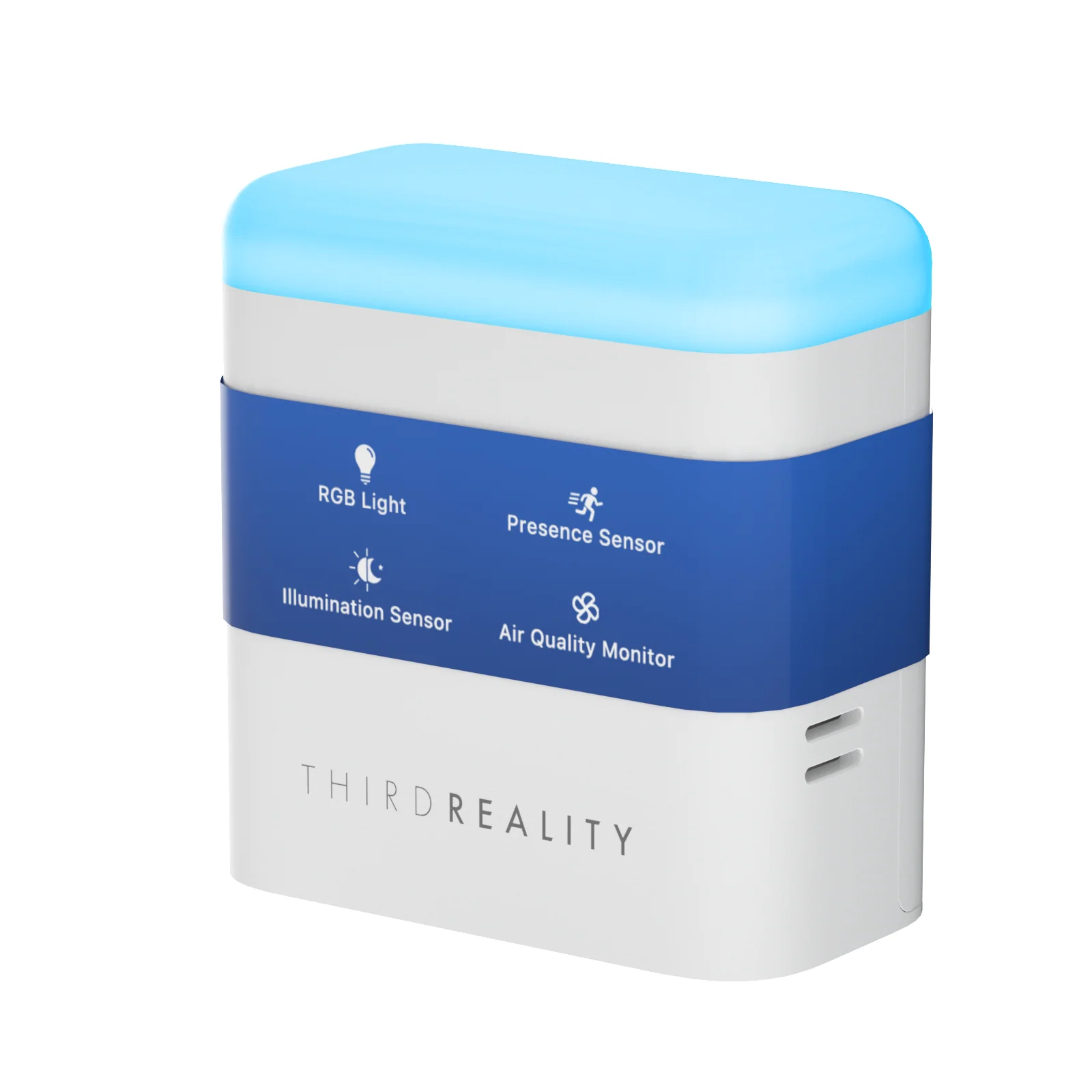
Smart home enthusiasts have long struggled with the limitations of traditional Passive Infrared (PIR) motion sensors. We have all experienced the frustration of sitting still in a room, only for the lights to abruptly shut off because the sensor assumed the space was empty. Enter the ThirdReality Smart Presence Sensor R3, a device that promises to banish these annoying false negatives once and for all by utilizing advanced millimeter-wave (mmWave) radar technology. In this comprehensive hands-on review, we take an in-depth look at whether the R3 lives up to its promises, exploring its unboxing experience, design, setup process, and real-world daily performance.
First Impressions: Unboxing the ThirdReality R3
Unboxing a new smart home gadget is always an exciting ritual, and the ThirdReality R3 starts things off on a practical, no-nonsense foot. The device arrives in a compact, eco-friendly cardboard box that avoids excessive plastic packaging. Upon opening it, you are immediately presented with the sensor itself, neatly nestled alongside its essential accessories. ThirdReality includes a USB-C power cable, a versatile magnetic mounting base, double-sided adhesive tape, and a straightforward user manual to get you started.
As shown in our unboxing video, the first thing that strikes you is just how remarkably small the R3 is. Many mmWave sensors on the market tend to be bulky eyesores, but the R3 is delightfully petite, easily fitting in the palm of your hand. The clean presentation immediately signals that this is a consumer-ready device designed to blend seamlessly into modern home decor rather than looking like a rugged industrial component.
Slipping the sensor out of its cardboard tray, the lightweight nature of the device becomes apparent. Despite its featherweight feel, it doesn’t come across as fragile or cheaply made. The matte finish of the white plastic shell is pleasant to the touch and resistant to fingerprints, which is a subtle but appreciated design choice for a device you will inevitably handle during positioning and adjustment.
The included documentation is surprisingly clear and concise, a refreshing change from the poorly translated manuals that often accompany budget smart home gear. It clearly outlines the technical specifications, including its Zigbee 3.0 connectivity and dual-detection capabilities (combining mmWave radar with a traditional light sensor). This initial encounter leaves a strong impression of a well-thought-out product designed for quick deployment.
Design and Build Quality: A Closer Hands-On Look
Taking a closer look at the physical design of the ThirdReality R3, it is clear that the designers aimed for minimalist discretion. The front face features a slightly raised, translucent dome that houses the sensor array, flanked by a tiny LED indicator that whispers rather than screams its status. Its soft, rounded square silhouette and neutral white color scheme ensure that once it is mounted on a wall or ceiling, it quickly fades into the background of almost any room.
The mounting system is easily one of the standout design elements of the R3, as captured in our close-up photo gallery. It utilizes a clever magnetic ball-and-socket joint that allows for an impressive range of motion. This 360-degree rotational flexibility is crucial for a presence sensor, as mmWave technology relies heavily on precise angling to avoid "false positives" from moving ceiling fans, blowing curtains, or pets.
On the rear and bottom of the unit, you will find a modern USB-C port for power delivery. It is worth noting that like most high-performance mmWave sensors, the R3 requires a constant wired power source to run its active radar sweeps, so you will need to plan your placement near an electrical outlet. While some might lament the lack of a battery-powered option, the power demands of continuous radar detection make a wired connection a necessary and reliable choice.
In terms of overall build quality, the R3 feels structurally sound with tight seams and no noticeable creaks when squeezed. It easily holds its own against more expensive competitors like the Aqara FP2 or Sonoff presence sensors. ThirdReality has struck a commendable balance here, delivering a device that feels durable enough to survive accidental drops during installation while maintaining an elegant, unobtrusive aesthetic.
Setting Up the R3 Sensor in Your Smart Home
Setting up the ThirdReality R3 is a breeze, primarily thanks to its reliance on the highly stable Zigbee 3.0 protocol. This choice of wireless communication means it doesn’t clog up your home’s Wi-Fi network and integrates seamlessly with a wide array of smart home coordinators. Whether you are using a dedicated ThirdReality Hub, a Samsung SmartThings station, an Amazon Echo with a built-in Zigbee hub, or a DIY Home Assistant setup via Zigbee2MQTT, the R3 is ready to play nice.
For our hands-on testing, we paired the R3 with both Home Assistant and a standard Echo Show. Initiating pairing mode is as simple as plugging the device into power and holding down the small reset button on the side until the blue LED begins to flash. Within seconds, both platforms discovered the sensor, properly identifying it as a presence and illuminance sensor without requiring custom device handlers or complex workarounds.
Once paired, the available configuration options depend slightly on your smart home platform of choice. Through advanced platforms like Home Assistant, you gain access to fine-tuned controls such as detection sensitivity, fade time (how long it waits before declaring a room empty), and detection range. Having the ability to adjust these parameters is vital for tailoring the sensor to the specific layout and activity levels of your living space.
Physical placement is the final, crucial step of the setup process. Thanks to the included double-sided adhesive and magnetic mount, we were able to easily test different mounting spots, eventually settling on a corner wall mount about seven feet off the ground. This elevated, angled position gave the mmWave radar an unobstructed view of the entire room while minimizing potential interference from low-lying obstacles.
Real-World Performance: Testing the Radar Technology
The real test of any presence sensor lies in its day-to-day performance, and this is where the ThirdReality R3 truly shines. Traditional PIR sensors require you to wave your arms frantically to keep the lights on, but the R3’s mmWave radar can detect the micro-movements of your chest rising and falling as you breathe. During our testing, we sat perfectly still on a couch reading a book for over an hour, and the R3 successfully maintained the "occupied" status without a single drop.
Speed and responsiveness are equally impressive. When walking into a dark room, the sensor registers motion almost instantaneously, triggering our automated overhead lights in a fraction of a second. This rapid response time is critical for high-traffic areas like hallways and bathrooms, where lagging motion detection can quickly become a daily annoyance for family members.
Of course, mmWave radar can sometimes be too sensitive, registering "presence" from moving objects like blowing curtains or an oscillating fan. We tested this by turning a ceiling fan on high speed within the sensor’s field of view; fortunately, by slightly lowering the sensitivity settings in our smart home app, we were able to completely eliminate these false triggers. The sensor also proved smart enough to ignore minor vibrations from nearby appliances, demonstrating excellent algorithm tuning on ThirdReality’s part.
Additionally, the integrated illuminance sensor adds a layer of sophistication to your automation logic. It reports light levels in lux, allowing you to create smart rules such as "only turn on the lights when presence is detected and the room is actually dark." Our video demonstration shows this dual-sensor automation working flawlessly, preventing unnecessary energy usage during bright, sunny afternoons.
Final Verdict: Is the ThirdReality R3 Worth Buying?
After living with the ThirdReality Smart Presence Sensor R3 for several weeks, we can confidently say it is one of the most reliable and user-friendly mmWave sensors on the market today. It successfully bridges the gap between hyper-sensitive radar detection and practical daily usability. With its compact design, rock-solid Zigbee 3.0 connection, and highly accurate micro-movement tracking, it solves the age-old problem of static presence detection with ease.
That is not to say it is completely without compromises. The requirement for a continuous USB power connection means you will have to deal with visible cords unless you get creative with cable management or wall routing. Furthermore, to unlock the absolute best performance and deep customization options, you will need a robust smart home coordinator like Home Assistant, as basic platforms may limit your ability to adjust sensitivity zones.
However, when you look at the price-to-performance ratio, the R3 is an absolute steal. Many competing mmWave sensors are either prohibitively expensive or require clunky proprietary apps that rely on unstable Wi-Fi connections. By choosing Zigbee, ThirdReality has delivered a local, private, and lightning-fast sensor that doesn’t break the bank, making it feasible to outfit multiple rooms in your home without blowing your budget.
If you are tired of being left in the dark by outdated PIR motion sensors and want to elevate your home automation to the next level, the ThirdReality R3 is a worthy investment. It is a mature, well-engineered product that delivers on its promises with minimal fuss. For both smart home beginners and seasoned DIY enthusiasts, the R3 easily earns our stamp of approval as a must-have addition to any modern smart home setup.
Ultimately, the ThirdReality Smart Presence Sensor R3 proves that advanced smart home technology doesn’t have to be overly complicated or expensive. By mastering the delicate balance of mmWave precision, Zigbee reliability, and elegant industrial design, ThirdReality has created a product that truly enhances the convenience of automated living. If you are ready to experience true, hands-free room presence detection that actually works, the R3 is undoubtedly the way to go.